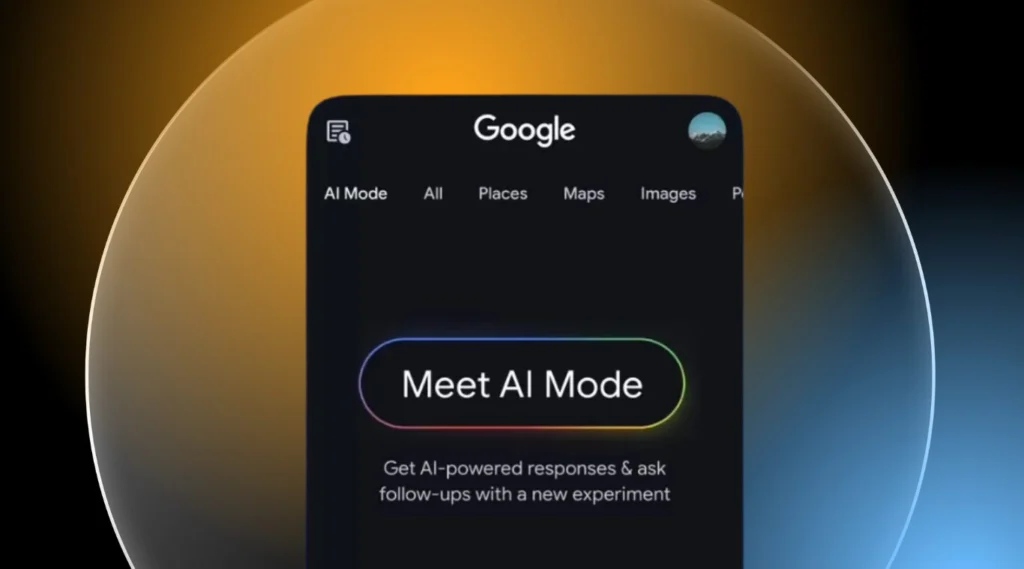

Search is no longer limited to traditional search results. Potential customers can now use ChatGPT, Google AI Overviews, AI Mode, Gemini and Perplexity to research topics, compare solutions and discover brands. For businesses, this means search visibility increasingly depends not only on traditional rankings, but also on whether their content can be discovered, understood, cited and mentioned by AI-powered search experiences. This shift has driven growing interest in AI search optimization, Answer Engine Optimization (AEO) and Generative Engine Optimization (GEO).
However, optimizing for AI search should not begin with publishing more content or chasing the latest GEO tactics. If important pages cannot be crawled, existing content provides limited value, brand expertise is unclear or AI visibility cannot be measured, additional optimization may deliver little business impact. Google’s guidance also reinforces that foundational SEO and useful, original content remain important for its generative AI search experiences. Before investing in GEO or AEO, businesses should therefore assess whether their website has the right foundation. Here are 10 things to check before optimizing your website for AI search.
What Does It Mean to Optimize a Website for AI Search?
AI search optimization is the process of improving a website’s ability to be discovered and represented across AI-powered search and answer experiences.
Depending on the platform and query, this could mean your website is:
- cited as a source;
- mentioned by brand name;
- included in a product or service comparison;
- referenced when an AI explains a topic;
- recommended in response to a commercial query; or
- discovered by users who subsequently visit your website.
These outcomes should not be treated as identical.
For example, a page can be cited without the AI explicitly mentioning the company behind it. Semrush analysed 3,981 domain appearances across ChatGPT, Google AI Overviews, Gemini and Google AI Mode in a 2026 study. It found that 61.7% were “ghost citations”, where the website appeared as a source but the brand was not named in the answer.
This distinction matters because successful AI search optimization should not be reduced to collecting citations. Businesses should consider visibility, brand recognition, referral traffic and eventual commercial outcomes. Before pursuing those outcomes, start with the following checks.
1. Check Whether Your Important Pages Are Crawlable and Indexable
Before optimizing content for AI search, make sure search engines can actually access and index your important pages. If a service page, product page or valuable article is blocked from crawling or excluded from the index, its opportunity to gain visibility through search is significantly limited.
Review technical issues such as robots.txt rules, noindex tags, canonical tags, XML sitemaps, broken internal links and indexing errors. Pay particular attention to commercially important pages, including service pages, product pages, comparison content and high-value educational resources.
This foundation remains relevant to AI-powered search. Google states that pages need to meet its normal technical requirements and be eligible to appear in Search before they can be considered for features such as AI Overviews and AI Mode.
Before asking “How can we get cited by AI?”, businesses should first ask: “Can search systems reliably access, index and understand our most important pages?”
If the answer is uncertain, technical SEO should come first.
2. Check Whether AI Search Crawlers Can Access Your Website
Beyond traditional search engine crawlers, businesses should also review whether AI search crawlers can access their website. Different AI platforms may use their own crawlers to discover and retrieve web content, and restrictive robots.txt settings could unintentionally limit visibility.
For example, OpenAI uses OAI-SearchBot for search-related discovery. According to OpenAI’s publisher guidance, websites that want their content to be discoverable and cited in ChatGPT search should allow OAI-SearchBot access. This is separate from GPTBot, which is associated with potential model training.
Businesses should therefore review their robots.txt configuration and crawler permissions before investing in AI search optimization. Blocking an AI crawler may be an intentional decision, but it should align with the company’s visibility strategy. If the goal is to appear in AI-powered search results, ensure technical settings are not unintentionally preventing relevant platforms from accessing your content.
3. Check Your Existing SEO Foundation
AI search optimization should build on a strong SEO foundation, not replace it. Google states that established SEO best practices remain relevant to generative AI experiences such as AI Overviews and AI Mode. If a website already struggles with technical issues, weak content or poor site structure, adding GEO or AEO tactics alone is unlikely to solve the underlying visibility problem.
Before moving further into AI search optimization, review key areas such as site architecture, internal linking, mobile usability, page experience, duplicate content, organic visibility and the quality of important commercial pages. These fundamentals help search systems discover, understand and evaluate your website more effectively.
For businesses, the priority should therefore be to strengthen existing SEO weaknesses before investing heavily in AI-specific optimization. A technically healthy website with useful content and clear topical relevance provides a stronger foundation for visibility across both traditional and AI-powered search.
4. Check Whether Your Content Answers Real Customer Questions
AI search is increasingly conversational. Instead of searching with short keywords, users may ask detailed questions about problems, comparisons, costs, recommendations and purchasing decisions. Your website should therefore provide clear answers to the questions potential customers actually ask throughout their buying journey.
Review your content across different stages of search intent, from awareness and consideration to comparison and decision-making. For example, instead of only targeting a broad keyword such as “ERP software,” content could address questions such as “What should an SME consider before implementing ERP?” or “How much does ERP implementation cost in Malaysia?”
This does not mean creating a separate page for every possible AI prompt. Instead, focus on building comprehensive topic coverage that answers related customer questions naturally. Content that genuinely helps users understand a problem, compare options and make informed decisions creates a stronger foundation for both traditional SEO and AI search visibility.
5. Check Whether Your Content Adds Original Value
Publishing more content does not automatically improve AI search visibility, especially when that content simply repeats information already available across hundreds of other websites. Before creating new pages, evaluate whether your existing content contributes something genuinely useful and distinctive.
Original value can come from first-hand experience, proprietary data, case studies, expert insights, original research, practical examples, customer insights or market-specific knowledge. For example, a general article explaining “What Is ERP Software?” may offer limited differentiation, while an article discussing real ERP implementation challenges faced by Malaysian SMEs provides more specific and useful context.
The goal should not be to produce content simply because a keyword or AI prompt exists. Instead, create resources that demonstrate experience, expertise and unique business knowledge. Content that contributes something meaningful to a topic gives both users and search systems a stronger reason to recognise your website as a valuable source.
6. Check Whether Your Brand and Expertise Are Clearly Defined
Strong content alone may not be enough if search and AI systems cannot clearly understand who your business is, what it does and what topics it has expertise in. Your website should consistently communicate your services, industry experience, target market and areas of specialization.
Review important trust and brand signals such as your About page, service pages, author profiles, case studies, company information, credentials and expert contributions. These elements help establish context around the organisation behind the content and provide stronger evidence of real-world experience and expertise.
This is particularly important because an AI citation is not always the same as a brand mention. A 2026 Semrush study found that websites can be cited as sources without their brand names appearing prominently in the generated answer. Businesses should therefore aim not only to create useful content, but also to build a clear and consistent brand identity around the topics they want to be known for.
7. Check Whether Your Content Is Clearly Structured
Clear content structure helps both users and search systems understand the information on a page. Long, poorly organised pages can make important information harder to identify, while a logical hierarchy makes relationships between topics, questions and answers easier to follow.
Review whether your content uses descriptive headings, concise paragraphs, clear definitions, comparison tables, step-by-step explanations, relevant FAQs and meaningful internal links where appropriate. Each section should address a specific topic while still contributing to the overall purpose of the page.
However, avoid artificially breaking content into small sections simply to make it appear more “AI-friendly.” Google states that special content formatting or artificial chunking is not required for its generative AI search features. The priority should remain clear, useful and well-organised content designed for readers first, while making important information easier for search and AI systems to interpret.
8. Check Your Structured Data
Structured data helps search engines understand the meaning and context of information on your website. Depending on the type of business and content, relevant schema markup may include Organization, LocalBusiness, Product, Article, Breadcrumb and other applicable structured data types.
Before optimizing for AI search, review whether your structured data is accurate, valid and consistent with the visible content on each page. Incorrect or misleading markup can create confusion rather than improve search visibility. Businesses should also avoid adding schema simply because it appears related to AI without understanding its purpose.
Importantly, structured data should not be treated as a shortcut to AI visibility. Google’s guidance for generative AI search states that no special schema markup is required to appear in AI Overviews or AI Mode. Instead, use structured data to provide clearer machine-readable context while continuing to prioritise technical SEO, useful content and a well-organised website.
9. Check Your Current AI Search Visibility
Before making changes, establish a baseline of how visible your brand currently is across AI search platforms. This allows you to identify existing strengths, visibility gaps and the competitors or sources that appear when potential customers ask commercially relevant questions.
Test a group of important branded and non-branded prompts across platforms such as ChatGPT, Google AI Overviews, Google AI Mode, Gemini and Perplexity. Track whether your brand is mentioned, whether your website is cited, which pages are referenced, how your business is described and which competitors appear instead.
Avoid judging AI visibility based on a single prompt. A 2026 Semrush study found that brand visibility can vary significantly across related prompts within the same topic. Businesses should therefore monitor groups of customer questions over time to understand where their brand has visibility, where competitors are stronger and which topics require further optimization.
10. Check Whether You Can Measure AI Search Performance
AI search optimization should be measurable. Before making major changes, establish how you will track whether your efforts are actually improving visibility, website traffic and business outcomes. AI performance should not be evaluated only by whether your brand appears in an answer.
Track multiple signals, including AI citations, brand mentions, cited pages, referral traffic, engagement and conversions. For ChatGPT, OpenAI states that search referral URLs automatically include utm_source=chatgpt.com, which can help businesses identify relevant traffic in their analytics. Google also provides a Generative AI performance report in Search Console, giving website owners greater visibility into impressions from AI Overviews and AI Mode.
Most importantly, connect AI search visibility with commercial performance. A growing number of citations may look positive, but the more valuable question is whether AI search helps potential customers discover your business, visit your website and eventually enquire or convert. Establishing this measurement framework before optimization gives you a clearer baseline for evaluating whether your AI search strategy is delivering meaningful results.
Prepare Your Website for AI Search
Optimizing for AI search is not simply about publishing more content or applying the latest GEO and AEO tactics. Strong visibility begins with the fundamentals: a technically accessible website, useful and original content, clear brand expertise, structured information and a reliable way to measure performance.
Before investing further in AI search optimization, businesses should understand where their website currently stands, what is limiting visibility and which improvements are most likely to create meaningful results. The objective is not just to gain more AI citations, but to become more discoverable when potential customers are researching problems, comparing solutions and making decisions.
Build Your AI Search Visibility with Flow Digital
At Flow Digital, we help businesses strengthen their visibility across traditional and AI-powered search through SEO, AEO and GEO strategies built around measurable business goals.
From technical SEO and content optimization to AI visibility analysis and search strategy, we help identify the gaps preventing your website from being effectively discovered, understood and surfaced across modern search experiences.
Want to know whether your website is ready for AI search? Contact Flow Digital to discuss your SEO, AEO and GEO strategy and identify the next opportunities for improving your search visibility.
Frequently Asked Questions (FAQ)
01.How do I optimize my website for AI search?
Start with technical SEO, crawlability, useful content, clear website structure and strong brand information. Then evaluate how your website appears across platforms such as ChatGPT, Google AI Overviews, AI Mode, Gemini and Perplexity. AI search optimization should build on a strong SEO foundation rather than replace it.
02.Is SEO still important for AI search?
Yes. Google explicitly states that SEO best practices remain relevant to its generative AI search experiences because features such as AI Overviews and AI Mode are rooted in Google’s core Search ranking and quality systems. Technical SEO, helpful content and clear site structure therefore remain important.
03.Can ChatGPT crawl my website?
OpenAI uses OAI-SearchBot for search-related discovery. Website owners who want their content to be discoverable and cited in ChatGPT search should review their robots.txt configuration and ensure OAI-SearchBot is not unintentionally blocked.
04.Does schema markup help with AI search?
Structured data can help search engines understand information on a webpage and support eligibility for certain search features. However, Google states that no special schema markup is required for its generative AI features. Schema should accurately represent page content rather than being treated as an AI ranking shortcut.
05. Do I need llms.txt for AI search optimization?
Not as a universal requirement. In its current guidance for Google Search, Google specifically says website owners can ignore unnecessary AI text files such as llms.txt when optimizing for its generative AI search features. Businesses should prioritise crawlability, technical SEO and useful content before experimental tactics.
06.How do I know whether ChatGPT is sending traffic to my website?
OpenAI states that ChatGPT search referral URLs automatically include utm_source=chatgpt.com. Businesses can use analytics platforms to identify this referral traffic and analyse what visitors do after arriving on the website.
07.How can I measure visibility in Google AI Overviews and AI Mode?
Google now provides a dedicated Generative AI performance report in Search Console. It reports impressions from generative AI Search experiences and allows website owners to review data by dimensions including pages, countries, devices and dates.
08. Is being cited by AI the same as having strong brand visibility?
No. A website can be cited without the brand being explicitly named in the AI-generated answer. Businesses should therefore monitor citations, brand mentions, referral traffic and conversions separately rather than using citation count as the only measure of AI visibility.
09.Should I create a separate page for every AI search question?
Generally, no. Google warns against producing large numbers of pages for every possible query variation simply to influence rankings or generative AI responses. A stronger approach is to build comprehensive, useful topic coverage that naturally answers related customer questions.
10.How often should businesses audit their AI search visibility?
There is no universal frequency because visibility can change by platform, prompt, topic and market. For most businesses, establishing a consistent monthly or quarterly monitoring process is more useful than conducting isolated searches. High-priority commercial topics can be monitored more frequently when AI search visibility is strategically important.