


The way customers discover and purchase products has changed significantly. Traditional keyword searches on Google are no longer the primary method. Today, people find products through TikTok, Instagram, Reddit discussions, or even by asking AI tools like ChatGPT. In fact, most buyers now check social media platforms before making any purchase decision.
Simultaneously, search engines like Google are evolving into “answer engines,” providing AI-generated summaries directly on the results page, known as AI Overviews. Consequently, users often find the information they need without clicking on any website links, a phenomenon dubbed ‘zero-click searches’ Recent studies indicate that 65 percent of Google searches now result in zero clicks. While Google claims AI Overviews help users search more efficiently, many websites have experienced a decline in traffic as users no longer visit their pages.
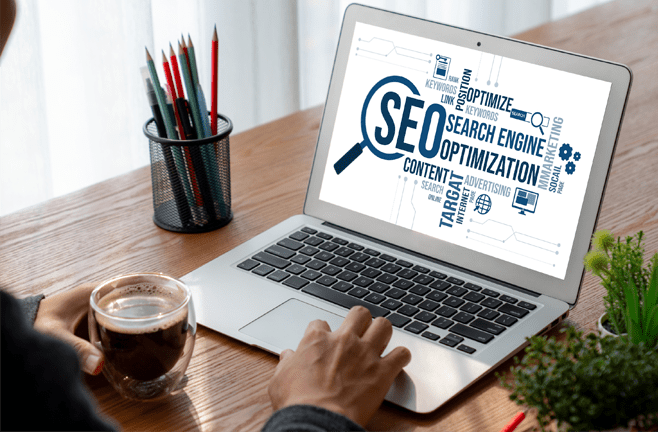
In this article, we’ll explore why traditional Search Engine Optimization (SEO) is no longer sufficient and how Generative Engine Optimization (GEO) helps businesses stay visible and grow in the age of AI-driven search.
Key Takeaway
- Online buyer behavior has shifted, with buyers now discovering products through AI tools and social media rather than traditional search engines.
- Zero-click searches are increasing as the online buyer journey shifts, with AI-generated answers reducing the need for users to visit websites.
- Traditional SEO is no longer sufficient because AI now delivers answers directly, making it crucial to optimize content for how AI understands and presents information.
- GEO is essential for businesses today as it drives visibility, builds trust, and increases conversions by placing your brand directly in AI-generated answers where purchase decisions happen.
Understanding the New Online Buyer Journey
This transformation has reshaped the buyer journey. The steps consumers take from discovering a product to making a purchase have become more compressed and AI-driven. The new buyer journey looks something like this:
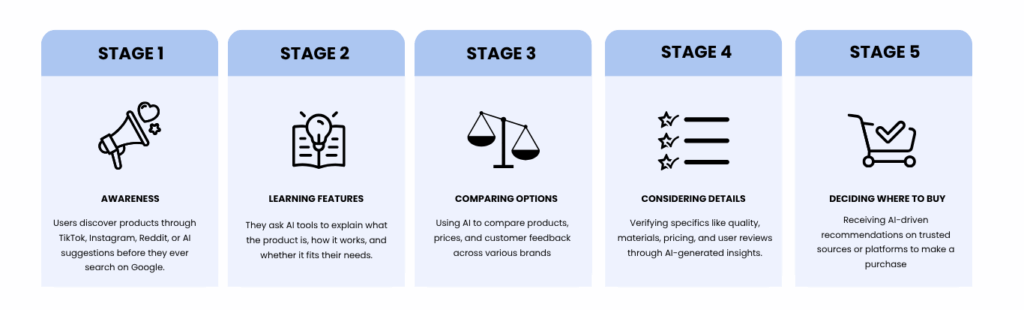
As a result, AI now plays a central role in this process, relying solely on Search Engine Optimization (SEO) is no longer effective. Businesses need to go further by adopting Generative Engine Optimization (GEO), a strategy focused on optimizing content in ways that AI models can understand, trust, and include in their responses. While GEO builds on the foundations of SEO (such as quality content and technical structure), it goes a step further by targeting AI-powered environments, ensuring that your brand is visible not just in search engine results, but directly within the answers AI tools provide.
Why Search Engine Optimization (SEO) Is No Longer Sufficient
Traditional SEO is centered on achieving high rankings in search engine results, aiming to drive users to click through to the website. However, the rise of AI-generated answers has revealed several limitations in this approach.
AI Often Lacks Depth Without Proper Content Structuring
AI tools aim to provide fast, complete answers. If your content is only optimized for traditional search engine rankings with keyword-heavy paragraphs and minimal structure, AI may struggle to extract clear, concise information. Even a top-ranked page may deliver poor AI summaries if not formatted correctly. This forces users to continue their search elsewhere, contradicting the efficiency AI is intended to provide, and highlights that traditional SEO was not built to support AI directly.
Reduced Clicks Result in Missed Business Opportunities
When users receive answers directly on the search results page, traffic to websites can decline significantly. Less traffic leads to fewer opportunities for lead generation, and reduces the size of your remarketing and advertising audience, making it harder to re-engage potential customers. Ultimately, it decreases the chances of driving direct sales through landing pages or other conversion-focused channels.
Moreover, AI becomes a middle layer between your business and potential customers. If AI summarizes your brand or product information inaccurately or combines it with competitors, your messaging may be diluted. Continuing to rely only on conventional SEO means businesses risk losing visibility, trust, and revenue.
How GEO Improves the Buyer Journey
GEO is not just a strategy for search engines. It enhances the entire customer experience by ensuring that AI provides accurate and valuable information across all stages of the buyer journey.
1. Providing Instant, Reliable Answers (Awareness Stage)

When users begin their search, GEO helps AI generate accurate summaries. This is achieved by using clearly structured content with informative headings, short paragraphs, and bulleted lists. Answering common questions under headings such as those in “People Also Ask” (PAA) boxes also increases visibility within AI-generated responses.
2. Making Comparisons Easier (Consideration Stage)

During the product comparison stage, GEO makes it easier for AI to extract detailed information. Using structured data formats like Schema.org for product names, prices, and reviews allows AI to present organized comparisons. Creating clear feature lists or side-by-side comparison tables also helps AI generate better responses. Additionally, encouraging detailed reviews across platforms gives AI more data to interpret user sentiment.
3. Simplifying Purchase Decisions (Decision Stage)

During the product comparison stage, GEO makes it easier for AI to extract detailed information. Using structured data formats like Schema.org for product names, prices, and reviews allows AI to present organized comparisons. Creating clear feature lists or side-by-side comparison tables also helps AI generate better responses. Additionally, encouraging detailed reviews across platforms gives AI more data to interpret user sentiment.
4. Improving Support After the Sale (Post-Purchase Stage)

Many customers use search engines for post-purchase support. GEO includes formatting your help sections and FAQs in a way that allows AI to quickly pull relevant answers. Using question-based headings and providing concise, structured responses ensures that users get the help they need without frustration. This also enhances customer satisfaction and loyalty.
By adopting GEO, businesses create a content ecosystem that allows AI to deliver useful, reliable answers. This benefits both the customer experience and the business’s long-term visibility.
How GEO Helps Businesses Grow in the AI Era
GEO is not just about preventing traffic loss. It is a strategic approach that enables businesses to grow and stay competitive in an increasingly AI-first environment.
Influencing How AI Describes Your Brand
GEO allows you to shape the narrative around your brand in AI-generated responses. By producing high-quality content that reflects your strengths and aligns with the E-E-A-T (Experience, Expertise, Authoritativeness, Trustworthiness) framework, you can ensure that AI systems retrieve accurate information. This also includes gaining mentions and backlinks from reputable websites, which strengthens your brand’s credibility in the eyes of AI algorithms.
Building Authority Without Relying on Clicks
Even if users do not click on your links, appearing in AI Overviews and other search features still increases your visibility. Users become more familiar with your brand when they consistently see your content providing helpful answers. Over time, this builds recognition and trust, making the search results page itself a platform for brand marketing.
Turning AI Mentions into Measurable Outcomes
GEO helps convert AI exposure into real business results. By optimizing content for high-intent queries such as “top digital agency in Hong Kong” or “best payment solution for SMEs,” you increase the chances of AI directing users to your services. Ensuring that your content includes contact forms, lead magnets, and purchase links helps convert interest into action.
To measure the impact of GEO, look beyond page views. Track brand mentions within AI summaries, the sentiment of those mentions, and how often leads or conversions originate from AI-driven journeys. While overall traffic may decrease, the visitors who do arrive are typically more qualified and closer to a purchase decision
Partner with Flow Digital to Win in AI-Driven Search
The digital search landscape has fundamentally changed, making Generative Engine Optimization (GEO) essential for long-term success. If your business is ready to adapt to the AI-first buyer journey and ensure your brand remains visible, trusted, and influential, GEO offers the strategic advantage you need.
At Flow Digital, we specialize in GEO strategies that help businesses thrive in this new environment. We’ll work with you to optimize your content for AI responses, enhance brand authority without relying solely on clicks, and convert AI mentions into measurable business outcomes.
Curious why so many brands are losing visibility in search despite great content? Read The Cost of Invisibility: How GEO Helps Brands Overcome Zero-Click Searches
Ready to elevate your brand’s visibility and influence in AI-powered search? Contact the Flow Digital team today for a tailored GEO strategy that turns visibility into measurable growth.
Frequently Asked Questions
SEO isn’t dead, but it’s no longer enough. GEO is the next evolution, optimizing content not just for rankings, but so AI can understand, trust, and feature your brand in its answers.
The buyer journey is now faster and shaped by AI. Consumers discover products through AI tools and social media (Awareness), ask AI how products work (Learning Features), compare options via AI summaries (Comparing Options), verify details like price and quality (Considering Details), and get AI suggestions on where to buy (Decision). GEO ensures your brand shows up accurately at each of these stages.
GEO helps you reach people who are already deep in their buying process, they’re not casually browsing; they’re comparing, asking, and deciding. If your content guides those AI responses, you’re showing up at the exact moment purchase decisions are made.
You risk becoming invisible. As AI tools like Google’s AI Overview answer user queries instantly, websites that aren’t GEO-optimized get skipped. That means fewer leads, fewer retargeting opportunities, and your brand getting overshadowed by savvier competitors.