In the era of AI-driven technologies, the question “Is SEO dead?” continues to surface among business leaders and marketers. The answer is no, but the SEO model that has dominated for two decades is undergoing a significant transformation. Traditionally, SEO success relied on identifying high-volume keywords, building backlinks, and ranking at the top of Google’s search engine results pages (SERPs). Today, this approach is losing its effectiveness as generative AI, conversational interfaces, and zero-click searches change user behaviour.
According to Bain & Company, 80% of consumers now rely on “zero-click” search results, cases where search engines and AI assistants display the answer directly on the page, bypassing websites entirely. This shift is already impacting traffic. Forbes reports that Google’s new AI Overviews could cause organic search traffic to decline by 15% to 64% depending on the industry, with some cities already experiencing declines of up to 40% of traffic.
Visibility is no longer determined solely by keyword rankings and backlinks. AI models now prioritise brands that are mentioned, cited, and trusted within their datasets. The new question for businesses is not “How do we rank higher on Google?” but “How do we get referenced by AI?” This article examines how AI is reshaping SEO and the strategies for business to remain visible and credible in this evolving landscape.
Why SEO is No Longer Just About Ranking?
Historically, SEO focused on ranking high on traditional search engines like Google, Bing, and Yahoo. That landscape is shifting: SEO is no longer solely about Google rankings; it’s about visibility across AI-driven channels.
AI provides answers without clicks
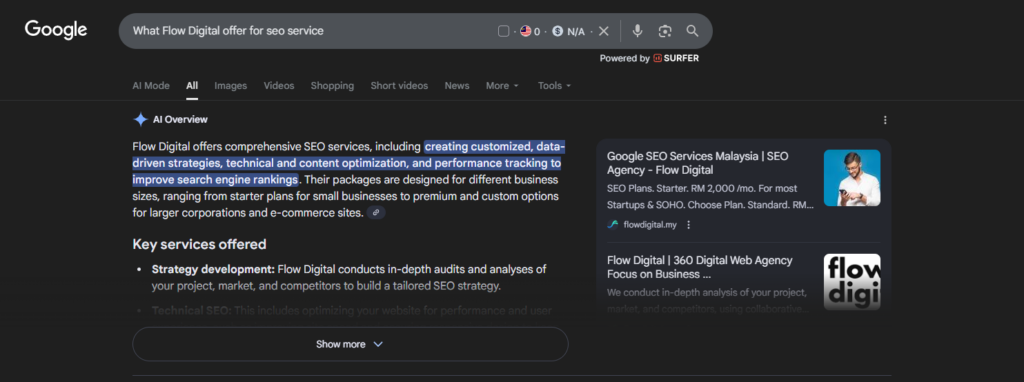
Tools like Google’s AI Overviews, ChatGPT, and Perplexity now give users complete answers instantly. This means people often get what they need without ever clicking a link to your website, which is causing a big drop in organic traffic and clicks.
Decline in traditional organic traffic

Industry analysts predict that businesses sticking only to traditional SEO could lose a large share of their website visitors potentially up to 40% within the next few year. Gartner has projected a 25% drop in traditional search engine volume by 2026, with a significant shift towards AI-driven search.
AI values mentioned over rankings
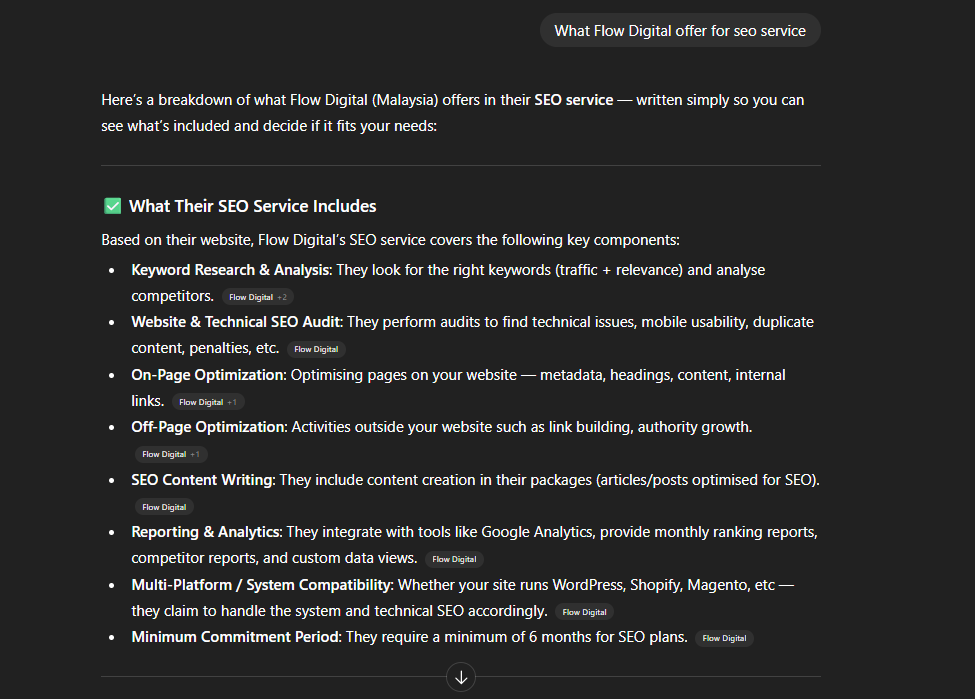
Nowadays, visibility isn’t just “ranking #1”, it’s being mentioned and cited in AI-generated answers. This means optimising for AI visibility, authoritative citations, and relevance in conversational search is now critical.
To remain competitive, marketers must expand their strategies to include AI visibility, authoritative citations, and optimised relevance within conversational search environments
How AI is Reshaping SEO in Search Engine
AI is redefining the way content is discovered and consumed online. Below are the key shifts transforming SEO and what they mean for businesses aiming to remain visible in an AI-driven search environment.
The Emergence of New SEO Strategies in the AI Search Era
The rise of Generative Engine Optimization (GEO), Answer Engine Optimization (AEO), and AI SEO reflects a fundamental change in how content is optimized. These approaches focus on making information AI-friendly, structured, concise, and easily extractable so it can be processed and presented by generative search engines rather than relying solely on traditional search rankings.
AI favours clear and structured formats
Generative search tools such as Google’s AI Overviews and chatbots prioritise content with Q&A sections, bullet points, tables, schema markup, and detailed metadata. This structure allows AI systems to understand, summarise, and display information more effectively.
Success is measured by AI visibility
Metrics are shifting from traditional rankings to AI-first measures such as brand mentions, citations, and the likelihood of being referenced in AI-generated responses.
What the Future of SEO Looks Like
The future of SEO is no longer defined by keywords alone and it will be shaped by the synergy between human-authored content, AI-driven discovery systems, and community trust signals. While search engines will remain part of the landscape, by 2030 the way people find, consume, and trust information will look entirely different.
Gain an edge with AI-powered search
Generative AI platforms such as Google’s Gemini, OpenAI’s ChatGPT, and Perplexity are replacing link-based searches with direct, conversational answers. Brands that embrace Answer Engine Optimization (AEO) and Generative Engine Optimization (GEO) will hold a competitive edge over those relying solely on traditional SERP rankings.
Build credibility through brand mentions
While backlinks will still matter, AI models place greater weight on brand mentions, citations, and contextual authority. Being present in reputable media, industry-specific forums, and trusted datasets will become critical for visibility.
Strengthen visibility through community engagement
Platforms such as Reddit, Quora, and niche forums are increasingly cited by AI engines because they contain organic, first-hand perspectives that users trust. Sharing authentic insights in these spaces builds trust, generates “social proof” through upvotes and discussion, and increases your chances of being included in AI-generated answers.
Expand reach through multi-format content
AI draws information from multiple formats such as text, images, videos, audio, and transcripts. Communities often produce content across these formats, giving your brand multiple opportunities to be recognised and referenced in AI answers.
Measure success with AI-focused metrics
SEO performance will be measured by AI citation frequency, answer inclusion rate, and cross-platform discovery, reflecting how often and where AI tools surface your brand. It’s crucial to explore persona-based rank tracking and AI-specific analytics to know how different users see different answers.
How Businesses Can Stay Ahead in the AI-Driven SEO Era
To thrive in this rapidly changing landscape, businesses must adopt a hybrid approach that blends traditional SEO with AI-focused strategies.
1. Maximise reach with a hybrid SEO strategy
Traditional SEO is still essential for technical optimisation, link-building, and targeting long-tail keywords. However, pairing it with Answer Engine Optimisation (AEO) ensures your content is structured for voice assistants and AI chatbots, while Generative Engine Optimisation (GEO) improves the likelihood of being cited in AI-generated answers. Leveraging AI SEO tools can further automate and refine optimisation across all fronts, helping brands capture audiences in both search engines and AI-driven platforms.
2. Optimize Content for AI Readability
AI platforms prioritise structured, easy-to-interpret content. Using schema markup, bullet points, tables, and concise formatting enables AI systems to quickly extract and present your information. Incorporating AI-powered SEO tools ensures your content remains machine-readable, increasing the chances of appearing directly in AI responses and zero-click searches.
3. Build authority through credible citations
In the AI era, visibility depends on being referenced in authoritative datasets, media outlets, and industry discussions. Creating high-quality, credible content increases the likelihood of being cited by AI engines, strengthening brand trust and long-term recognition.
4. Leverage community-driven and multimodal content for more visibility
Active participation in relevant communities such as Reddit, LinkedIn groups, and industry-specific forums helps establish authenticity and trust. Repurposing this content into videos, podcasts, and infographics expands your reach across multiple formats, offering AI more opportunities to surface your brand in its answers.
5. Diversify Channels and Content Formats
Don’t rely solely on Google. Optimising for AI search tools like ChatGPT, Perplexity, and Gemini, alongside maintaining a strong presence on social platforms such as TikTok, Instagram, and YouTube, ensures visibility across multiple channels. This diversification protects against potential declines from any single traffic source.
Partner with Flow Digital to Dominate AI-Driven Search
Is SEO dead? Far from it and it’s simply evolving. We’ve entered an AI-led era where content visibility depends on being structured, credible, and machine-readable, rather than just ranking high in search engines. Traditional SEO remains foundational but must now be integrated with Answer Engine Optimization (AEO), Generative Engine Optimization (GEO), and AI SEO to sustain and grow digital visibility.
Brands that adapt by creating structured, authoritative content, engaging meaningfully within communities, and measuring AI-centric outcomes will lead. Those that don’t evolve risk becoming invisible, no matter how well ranked they were in the past.
At Flow Digital, we specialize in AI SEO strategies tailored for the era of generative search. From AI-aided content structuring to community-driven campaigns and performance tracking for AI visibility, Flow Digital ensures you’re not just found but cited, trusted, and remembered.
Don’t wait for your traffic to drop, contact the Flow Digital team today and secure your place in the future of search.
Frequently Asked Questions (FAQ)
1. What is the difference between traditional SEO and AI SEO?
Traditional SEO focuses on ranking higher on Google through keywords, links, and on-page optimization. AI SEO goes beyond this by optimizing for AI-driven platforms like ChatGPT, Perplexity, and Google Gemini. It prioritizes structured, authoritative, and machine-readable content that AI can easily interpret and cite.
2. What are AEO and GEO, and why do they matter?
AEO (Answer Engine Optimization) focuses on structuring your content for AI assistants, voice search, and zero-click results. GEO (Generative Engine Optimization) ensures your content is discoverable and referenced in AI-generated summaries. Both help brands stay visible even when users don’t click traditional links.
3. How does AI affect my organic traffic and content strategy?
AI Overviews and zero-click results are reducing website traffic by 15–60% in some industries. That means fewer clicks but higher competition for brand visibility within AI summaries. Your content must now be designed to educate AI, not just search engines — concise, authoritative, and structured for quick comprehension.
4. Why is organic search traffic declining?
Zero-click searches are on the rise, AI engines like Google’s AI Overviews now display direct answers instead of just links. This means users often find what they need without visiting websites, reducing traditional organic traffic. The key is to be mentioned and cited within these AI summaries, not just ranked.
5. Will AI replace SEO professionals completely?
No, but it will redefine their role. Instead of technical optimization alone, SEO pros will become AI visibility strategists focusing on brand authority, content design for LLMs, and data quality. Human creativity and strategy still drive relevance, storytelling, and brand differentiation.
6. How do I get my brand mentioned in AI-generated answers?
Focus on authority signals. Build digital footprints across credible sources such as industry blogs, news outlets, podcasts, and communities like Reddit or Quora. AI models learn from these datasets; being consistently cited in authoritative spaces increases your likelihood of inclusion in AI answers.
7. Will backlinks still matter in AI SEO?
Yes, but quality matters more than quantity. AI systems prioritize trusted, authoritative mentions over random links. A single citation from a reputable source or community post can carry more weight than dozens of low-quality backlinks.
8. Should marketers start optimizing for ChatGPT, Gemini, Deepseek and Perplexity specifically?
Absolutely. These AI engines are becoming new discovery channels. You can optimize by feeding them structured data, publishing in Q&A formats, using schema markup, and ensuring your content is crawlable and attribution-friendly. Think of it as the new version of “ranking on Google” but smarter.
Lorem ipsum dolor sit amet, consectetur adipiscing elit. Ut elit tellus, luctus nec ullamcorper mattis, pulvinar dapibus leo.