

In the world of User Experience (UX) design, understanding your customer’s journey is paramount to creating memorable digital experiences. Customer experience journey mapping has emerged as a valuable technique in achieving this goal, providing marketers with a clearer picture on how to lead their target audience to a desired action.
In this article, we’ll delve into the intricacies of journey mapping in UI/UX and explore its significance in enhancing user experiences.
What is Journey Mapping and Why is it Relevant in UX?
Journey mapping is a visual representation of a customer’s interactions with a product or service across various touchpoints. It’s a comprehensive approach to understanding the entire customer experience journey and can be done before or after the launch of a digital platform.
The primary purpose of journey mapping in UX design is to help teams gain insights into user behaviour, needs, and pain points throughout their interaction with a digital product or service.
By putting yourself in the shoes of your customers, you can identify areas of improvement in your digital platform and services. Journey maps provide an overarching view of the user’s experience, enabling UX designers to make informed decisions that enhance usability, satisfaction and overall engagement.
The Advantages of Using Journey Mapping
Journey mapping offers multiple advantages for UX and web design teams, serving as a bridge between user needs and business goals. By placing users at the heart of the design process, it ensures every decision is made with empathy and clarity.
Enhanced User-Centric Design
Journey maps keep the focus on the user, ensuring that web design decisions align with user needs, expectations and provide the best experience possible.
Improved Problem Solving
By pinpointing pain points, UX designers can address issues that may hinder user satisfaction. This can be anything from a clashing button colour to a hindering website layout.
Better Collaboration
Journey maps facilitate cross-functional collaboration, aligning teams around a shared understanding of the user journey. When each team member understands the problem behind a user journey, they can provide the best solution to solve it.
Informed Prioritisation
Journey mapping streamlines prioritisation by identifying critical areas for improvement, allowing teams to allocate resources effectively for enhanced user experiences.
Reduced Assumptions and Guesswork
By relying on data and real user experiences, it ensures that design decisions are grounded in user-proven evidence and lead to products that align better with user expectations.
The Key Components of a User Journey Map
A well-developed user journey map includes several key components that work together to create a complete picture of the user experience:
Touchpoints
Identify all the points where users interact with your product, website, or service — from the first impression to post-purchase engagement.
Persona Development
Build detailed user personas to represent different audience segments, helping you understand their motivations, behaviours, and pain points.
Customer Emotions
Track and record the emotions users experience at each touchpoint to uncover how they feel throughout their journey.
Pain Points
Identify obstacles, frustrations, or usability issues that disrupt the flow of the user experience.
User Goals
Define what users are trying to achieve at every stage of the journey, ensuring your design supports these objectives.
Key Interactions
Highlight the most important actions or engagements between the user and your product — such as sign-ups, clicks, or purchases.
Feedback and Reviews
Include qualitative feedback and user reviews to gain insights into satisfaction levels and potential improvement areas.
Conversion Points
Mark the key decision-making or transactional moments that define success within the user journey.
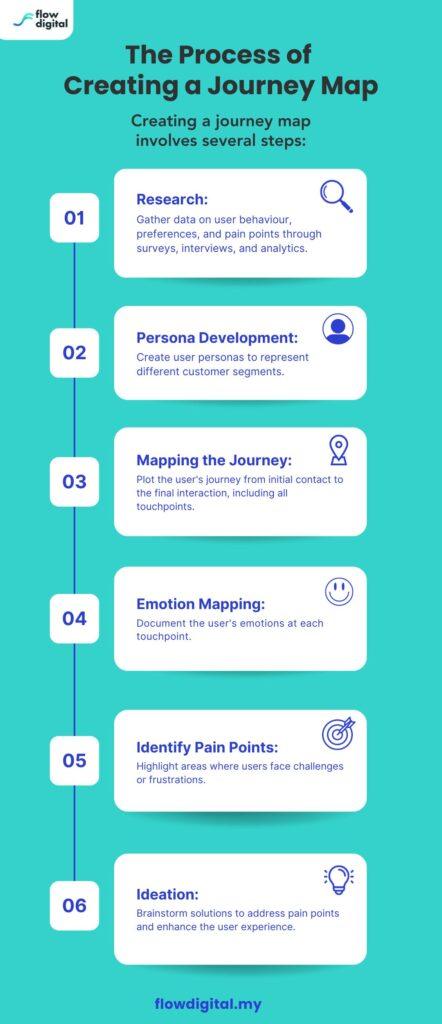
The Process of Creating a Journey Map
The Importance of Customer Journey Mapping
Customer journey mapping matters because it empowers UX designers to make data-driven decisions that lead to superior user experiences. By understanding the entire customer journey, web designers can optimise interactions, reduce friction and ultimately create products and services that users love.
Moreover, customer journey mapping plays a crucial role in the success of businesses. It helps organisations align their strategies with the needs and expectations of their customers, ultimately enhancing customer satisfaction and loyalty. By visualising the customer experience from start to finish, companies can identify opportunities for innovation and differentiation in the market.
Furthermore, it provides a valuable tool for customer support teams to anticipate and address potential pain points, ensuring a seamless and satisfying journey for every user.
Tips and Best Practices for Creating Effective User Journey Maps
Creating a user journey map isn’t just about visualising steps — it’s about understanding your users on a deeper level and translating that understanding into meaningful design and business decisions. To ensure your journey map is both actionable and effective, it’s important to follow a set of best practices that balance collaboration, research, and continual refinement. Here are some key tips and best practices to guide you:
Involve Cross-Functional Teams
Collaborate with teams across departments including design, marketing, development, and customer service, to gather a wide range of insights. This ensures every aspect of the user journey is viewed through multiple perspectives.
Keep Users at the Centre
Always prioritise user needs and expectations in your design decisions. Conduct user interviews, beta testing, and usability studies to confirm that your assumptions align with real user behaviours.
Continuously Update and Refine
User behaviours evolve, and so should your journey map. Regularly review and update it to reflect new insights, emerging trends, and feedback from ongoing analytics.
Use Visual Storytelling
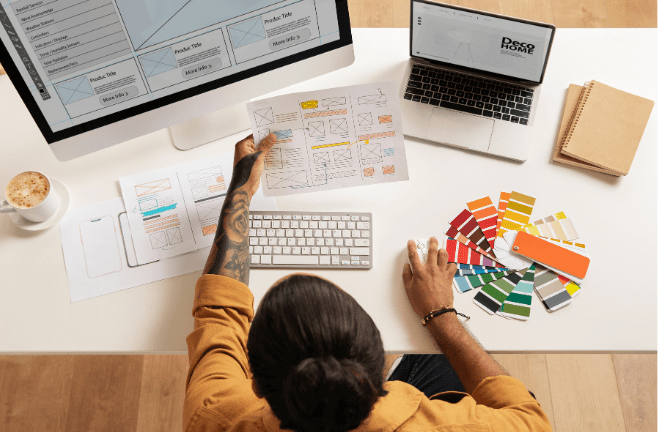
Present your journey map in a visually engaging format like a timeline, flowchart, or storyboard, to make it easy to interpret. Complement it with buyer personas to bring user motivations to life.
Focus on Pain Point Prioritisation
Identify the most pressing pain points that directly impact user satisfaction and conversion. Addressing these first ensures your team focuses on changes that create the most value.
Segment Your User Base
Different audiences experience your product in different ways. Create separate journey maps for unique user personas to capture distinct behaviours, motivations, and needs.
Leverage Real User Data
Ground every decision in evidence. Use analytics, feedback forms, and heatmaps to validate insights and ensure your journey maps accurately reflect real user experiences.
Document User Goals
Clearly define what users aim to achieve at each stage of their journey. This helps align your design and content strategy with both user intent and business objectives.
Partner with Flow Digital To Turn Insights into Action
User journey mapping is a strategic tool that helps you understand your audience, anticipate their needs, and design experiences that truly resonate. When done right, it bridges the gap between what users expect and what businesses deliver, ensuring every interaction is purposeful and seamless.
By combining data, empathy, and cross-functional collaboration, journey maps empower teams to make smarter design decisions, reduce user friction, and drive better business outcomes. Whether you’re building a new website, refining an app, or enhancing an existing digital experience, a clear understanding of your users’ journey is the foundation for long-term success.
At Flow Digital, our team of UX experts specialises in transforming user data into meaningful strategies that enhance customer experience and maximise conversions. We help businesses create detailed journey maps that highlight opportunities for growth and improve every touchpoint of their digital presence.
Ready to elevate your user experience strategy?
Contact Flow Digital today to discover how our UX design and consulting services can help you craft more engaging, user-centric experiences.