

Running an F&B business in Malaysia involves far more than serving good food. Behind every restaurant, café or multi-outlet chain are customer enquiries, reservations, supplier invoices, stock movements, employee schedules, marketing activities and management reports that need to be handled every day. As transaction volumes grow, these processes can consume significant employee time. This creates opportunities for AI automation for Malaysian F&B businesses, particularly where work is repetitive, high-volume and measurable.
Malaysia’s F&B sector is already placing greater emphasis on productivity. According to the Department of Statistics Malaysia (DOSM), labour productivity per hour worked in the food & beverages and accommodation subsector grew 9.2% year-on-year in the second quarter of 2026. AI automation can support this productivity push, but the objective should not be to automate everything.
The stronger approach is to identify specific workflows where automation can reduce manual work, improve response times, minimise errors or increase operational capacity, then measure whether those improvements justify the investment. Here are eight F&B workflows where AI automation can potentially deliver faster and more measurable ROI.
What Does AI Automation Mean for F&B Businesses?
AI automation combines artificial intelligence with automated workflows to complete or assist with tasks that would otherwise require employee input. For an F&B operator, this does not necessarily mean installing robots in the kitchen. Many of the strongest AI automation opportunities happen behind the scenes.
AI can help businesses:
- understand customer enquiries;
- extract information from invoices;
- classify customer feedback;
- analyse sales patterns;
- forecast demand;
- retrieve internal information;
- prepare management summaries; and
- move information between connected systems.
For example, instead of requiring an employee to manually read every online enquiry, an AI-powered workflow could identify the customer’s question, retrieve approved information, prepare an appropriate response and escalate unusual cases to an employee. The objective is to use AI Workflow Automation where it can reduce repetitive operational work while maintaining human oversight for decisions that require judgement.
Why Malaysian F&B Businesses Should Focus on ROI, Not AI Hype
AI can support many areas of an F&B business, but adopting it simply because it is trending does not guarantee better performance. Malaysian restaurants, cafés and multi-outlet operators should focus on AI automation opportunities that solve specific operational problems. The strongest opportunities are usually high-volume, repetitive and time-consuming workflows such as customer enquiries, supplier invoice processing, customer feedback analysis and outlet reporting.
Before implementing AI workflow automation, businesses should establish measurable benchmarks such as employee hours, response times, processing costs, error rates, food waste or repeat purchase rates. The goal is not to use as many AI tools as possible, but to identify where automation can create clear operational and financial value. Starting with one well-defined workflow, measuring the results and expanding only after proving its value can provide a more practical path to AI adoption.
The following eight workflows demonstrate where those opportunities may exist.
1. Customer Enquiry Automation
F&B businesses often receive the same customer questions repeatedly, from opening hours and menu availability to reservations, promotions, dietary requirements and outlet locations. When employees need to answer every enquiry manually across websites, messaging platforms and social media, these small interactions can quickly become a significant operational workload.
With AI workflow automation, AI can identify the customer’s intent, retrieve approved information and respond to routine enquiries automatically, while complex or sensitive requests are escalated to employees. This AI automation opportunity can help F&B businesses reduce repetitive customer service work, improve response times and allow employees to focus on in-store service and higher-value customer interactions.
Potential ROI: Reduced staff hours spent on repetitive enquiries, faster response times, fewer missed enquiries and improved enquiry-to-reservation conversion.
2. Reservation and Booking Automation
Managing reservations manually can become time-consuming, especially when booking requests arrive through multiple channels. Staff may need to check availability, collect customer details, confirm reservations, handle changes and send reminders, taking time away from customer service and daily operations.
With AI workflow automation, businesses can streamline the booking process by capturing reservation details, checking availability, sending confirmations and reminders, and escalating special requests to employees when necessary. This AI automation opportunity can reduce administrative work while creating a faster and more consistent booking experience for customers.
Potential ROI: Reduced booking administration, faster confirmation times, fewer missed enquiries and improved reservation conversion.
3. Customer Feedback and Review Analysis
Customer reviews can reveal important issues with food quality, service, waiting times, cleanliness and overall customer experience. However, manually reading and comparing large volumes of feedback across multiple platforms or outlets can be time-consuming, making it difficult for managers to identify recurring problems quickly.
With AI workflow automation, customer feedback can be automatically classified, summarised and grouped by common themes, helping management identify patterns across locations or time periods. This AI automation opportunity allows F&B businesses to turn unstructured customer feedback into actionable insights and address recurring issues before they have a greater impact on customer satisfaction.
Potential ROI: Reduced review-analysis time, faster identification of recurring issues, improved management visibility and quicker operational responses.
4. Inventory and Ingredient Demand Forecasting
Managing inventory is a constant challenge for F&B businesses. Ordering too much can increase food waste and holding costs, while ordering too little can lead to stockouts, unavailable menu items and missed sales opportunities. These risks become more difficult to manage when demand changes across different days, seasons, promotions or outlets.
With AI workflow automation, businesses can analyse historical sales, ingredient usage and demand patterns to support more accurate inventory forecasting and replenishment decisions. This AI automation opportunity can help managers anticipate ingredient requirements while maintaining human oversight for unexpected events, supplier issues and sudden changes in demand.
Potential ROI: Reduced food waste, fewer stockouts, better inventory control and more efficient purchasing decisions.
5. Supplier Invoice and Document Processing
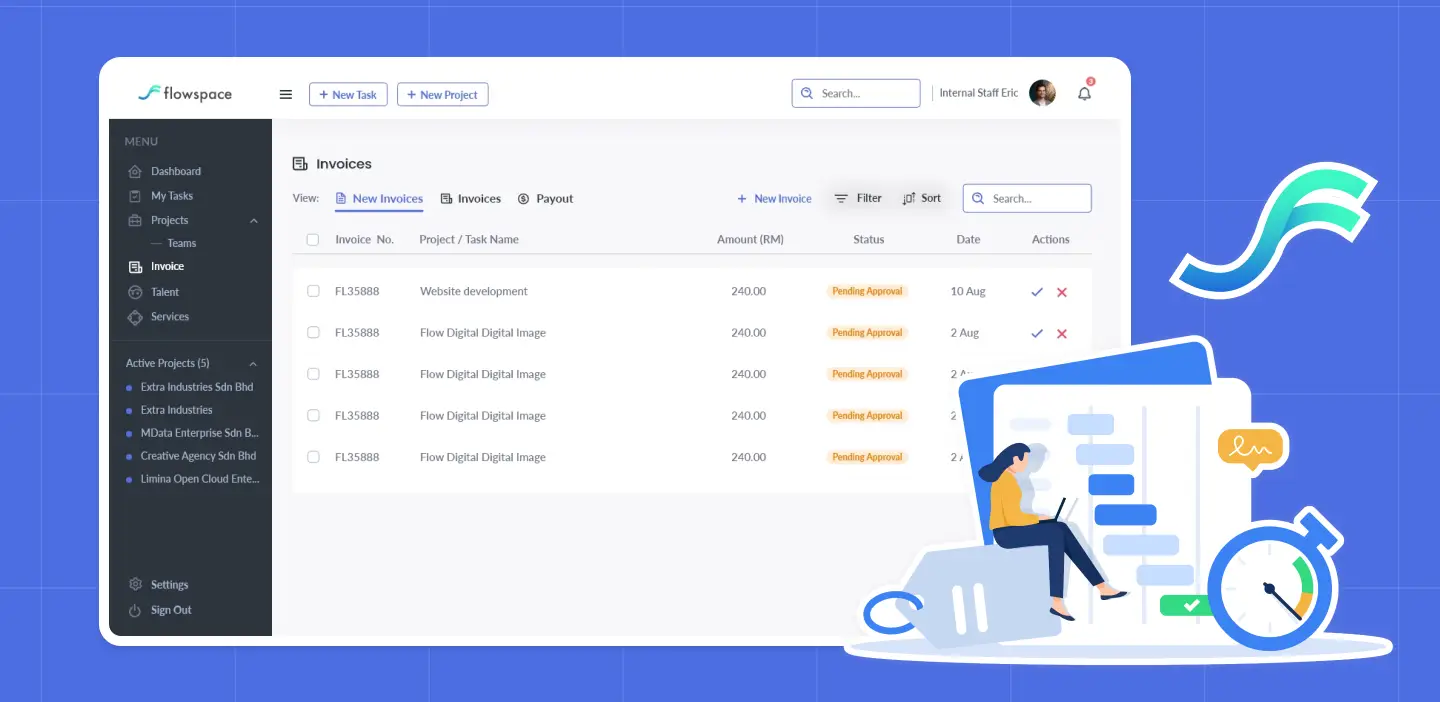
F&B businesses often process large volumes of supplier invoices, purchase documents and delivery records. Manually extracting details such as supplier names, invoice numbers, dates and amounts before entering them into accounting or approval systems can consume significant administrative time and increase the risk of data-entry errors.
With AI workflow automation, businesses can automatically extract and classify information from supplier documents, validate key details and route them to the appropriate employee for approval or accounting. This AI automation opportunity is particularly valuable for multi-outlet F&B businesses that handle a high volume of supplier transactions every month.
Potential ROI: Reduced manual data entry, faster invoice processing, fewer administrative errors and more efficient approval workflows.
6. Marketing and Customer Re-Engagement Automation
F&B businesses often collect valuable customer and transaction data but may not have the time to use it effectively. Without consistent follow-up, opportunities to reconnect with inactive customers, promote relevant offers or encourage repeat visits can easily be missed.
With AI workflow automation, businesses can segment customers based on purchase behaviour, visit frequency or other relevant data and trigger personalised campaigns at the right time. This AI automation opportunity can support birthday promotions, loyalty campaigns, inactive-customer re-engagement and targeted offers, while reducing the manual work required to manage each campaign.
Potential ROI: Increased repeat purchases, improved customer retention, higher campaign efficiency and better use of existing customer data.
7. Staff Scheduling and Internal Operations
Managing staff schedules can become complex when F&B businesses need to balance employee availability, peak operating hours, leave and changing customer demand. Managers may also spend significant time answering repetitive internal questions about SOPs, shift procedures, refunds, closing routines and other operational matters.
With AI workflow automation, businesses can use operational data to support staff scheduling while giving employees faster access to approved internal information and SOPs. This AI automation opportunity can reduce repetitive administrative work and help managers allocate their time and workforce more efficiently, while keeping important staffing decisions under human oversight.
Potential ROI: Reduced scheduling and administrative time, faster access to operational information, improved workforce allocation and greater management efficiency.
8. Multi-Outlet Reporting and Management Insights
Managing multiple F&B outlets often means dealing with data from different POS systems, inventory records, spreadsheets and operational reports. Manually consolidating this information can take significant management time and make it harder to identify sales changes, rising costs or operational issues across locations.
With AI workflow automation, businesses can consolidate operational data and generate summaries that highlight important trends, unusual performance changes and areas requiring attention. This AI automation opportunity gives management better visibility across outlets and reduces the time spent preparing reports, allowing teams to focus more on analysing performance and taking action.
Potential ROI: Reduced reporting time, faster identification of operational issues, improved cross-outlet visibility and more efficient management decision-making.
Where Does Malaysia's e-Invoice Fit In?
Malaysia’s e-Invoice implementation is encouraging F&B businesses to review how transaction data moves between their POS, accounting, inventory and invoicing systems. HASiL’s MyInvois e-POS provides MSMEs with functions including sales management, accounting, inventory management, financial reporting and e-Invoice issuance, highlighting the growing importance of connected digital business processes.
However, e-Invoice compliance itself is not AI automation. The AI automation opportunity lies in improving the workflows surrounding it, such as extracting invoice information, validating transaction data, routing documents for approval and reducing manual data transfer between systems. For F&B businesses, AI Automation can complement digital invoicing by creating more efficient and connected back-office operations.
Which F&B Workflow Should You Automate First?
The best workflow to automate is not necessarily the most advanced one. Malaysian F&B businesses should start with a process that is high-volume, repetitive, time-consuming and measurable, particularly where manual work is already creating delays, errors or unnecessary operating costs.
Workflow | Main Problem | AI Automation Opportunity | Key Measurement |
Customer Enquiries | Repetitive questions | AI enquiry handling | Response time |
Reservations | Manual booking administration | Booking automation | Staff hours |
Customer Feedback | Large volumes of reviews | AI feedback analysis | Analysis time |
Inventory | Waste and stockouts | Demand forecasting | Waste and stockouts |
Supplier Invoices | Manual data entry | Document processing | Processing time |
Marketing | Limited customer follow-up | Re-engagement automation | Repeat purchases |
Staff Operations | Scheduling and admin workload | AI-assisted workflows | Admin hours |
Multi-Outlet Reporting | Fragmented operational data | Automated reporting and insights | Reporting time |
For example, a restaurant receiving hundreds of repetitive enquiries may benefit from customer enquiry automation first, while a multi-outlet F&B group spending hours consolidating sales and inventory reports may find reporting automation more valuable. The right AI automation opportunity is the one that addresses a clear operational bottleneck and provides a measurable result before the business expands AI workflow automation into other areas.
How to Calculate the ROI of F&B AI Automation
To measure the ROI of AI Workflow Automation, F&B businesses should first establish how much time and money the existing process consumes. This baseline may include employee hours, processing costs, error rates, food waste, missed enquiries or other measurable operational costs. Businesses can then compare these figures with performance after automation.
For example, if a repetitive workflow requires 80 staff hours per month and automation reduces it to 25 hours, the business gains 55 hours of operational capacity. However, time saved alone does not equal ROI. Businesses should compare the financial value of these improvements against implementation, software, integration and maintenance costs.
A simple framework is:
ROI (%) = [(Financial Benefit from Automation − Total Automation Cost) ÷ Total Automation Cost] × 100
Financial benefits may come from reduced labour requirements for repetitive work, fewer errors, lower food waste, faster processing or additional revenue opportunities. The most important step is to define measurable KPIs before implementation so the business can determine whether an AI automation opportunity is delivering genuine commercial value rather than simply adding another technology tool.
Turn AI Automation Into Measurable F&B Business Value
AI automation can create significant opportunities for Malaysian F&B businesses, but the value does not come from adopting AI for the sake of it. It comes from identifying repetitive, high-volume workflows where automation can reduce manual work, improve operational efficiency and deliver measurable financial results.
Whether the opportunity lies in customer enquiries, reservations, inventory forecasting, supplier invoices or multi-outlet reporting, the best approach is to start with one clearly defined AI automation opportunity. Establish the current cost, implement the right AI Workflow Automation, measure the results and expand only when the business case is proven.
Identify Your Next AI Automation Opportunity with Flow Digital
Not sure which part of your F&B operation should be automated first? Flow Digital helps Malaysian businesses assess existing workflows, identify high-value automation opportunities and develop AI solutions that integrate with real business processes and systems.
From reducing repetitive administrative work to connecting operational data and improving workflow efficiency, our focus is on turning AI into measurable business value rather than simply adding more technology.
Contact Flow Digital to discuss your F&B operations and discover where AI automation could deliver the greatest impact for your business.
Plan Your Digital Transformation with Flow Digital
If your business is still relying on disconnected spreadsheets, manual approvals, duplicated data, or systems that do not communicate with each other, the first step is not choosing software. It is understanding which problems are costing the business the most.
Flow Digital helps Malaysian SMEs plan and implement practical digital transformation through ERP, Odoo implementation, business process automation, AI workflows, system integration, e-commerce, and custom digital solutions.
Our team can help you map existing processes, define a realistic scope, identify unnecessary customisation, estimate implementation requirements, and build a phased roadmap around measurable business outcomes.
Explore Flow Digital’s digital transformation and automation insights or contact our team to discuss a transformation plan that fits your operational priorities, budget, and growth stage.
Frequently Asked Questions (FAQ)
01.What is AI automation for F&B businesses?
AI automation for F&B businesses combines artificial intelligence with automated workflows to reduce repetitive manual work. It can support processes such as customer enquiries, reservations, inventory forecasting, supplier invoice processing, customer feedback analysis and management reporting.
02.How can Malaysian restaurants use AI automation?
Malaysian restaurants can use AI Workflow Automation to handle repetitive enquiries, streamline reservations, analyse customer reviews, process supplier documents, support inventory forecasting, automate customer re-engagement and consolidate multi-outlet reporting.
03. Which F&B workflow should be automated first?
Start with a workflow that is high-volume, repetitive, time-consuming and measurable. The best AI automation opportunity is usually a process that already consumes significant employee time, creates delays or generates avoidable operational costs.
04.Can AI automation reduce F&B operating costs?
AI automation can potentially reduce operating costs by decreasing repetitive administrative work, improving processing efficiency and reducing certain types of errors. However, actual savings depend on the workflow, implementation costs, transaction volume and results achieved after automation.
05.Can AI help F&B businesses reduce food waste?
AI-assisted demand forecasting can analyse historical sales, ingredient usage and demand patterns to support purchasing and inventory decisions. Better forecasting may help businesses reduce over-ordering and stockouts, although results depend heavily on accurate inventory and sales data.
06.Can AI automate restaurant customer enquiries and reservations?
Yes. AI can handle routine questions about opening hours, menus, promotions, outlet information and reservation availability. AI Workflow Automation can also capture booking information, send confirmations and reminders, while escalating complex or special requests to employees.
07.Can AI automate supplier invoice processing?
AI can extract information such as supplier names, invoice numbers, dates and amounts from documents before routing the information into validation, approval or accounting workflows. This can reduce manual data entry and speed up back-office processing.
08.Is Malaysia's e-Invoice system part of AI automation?
Not necessarily. Malaysia’s e-Invoice system is primarily a digital invoicing and compliance process. However, it can create opportunities to improve connected workflows involving POS, transaction, accounting and invoicing data, where automation may reduce manual processing.
09.How can F&B businesses measure AI automation ROI?
Businesses can establish KPIs before implementation and compare them with results after automation. Relevant metrics may include staff hours saved, processing time, response time, error rates, food waste, stockouts, repeat purchases and reporting time. These benefits should then be compared against implementation, software, integration and maintenance costs.
10.Is AI Workflow Automation suitable for small F&B businesses?
Yes, provided there is a clear business case. Small restaurants and cafés do not need to automate their entire operation. Starting with one repetitive workflow that consumes significant time and has a measurable outcome can provide a practical way to evaluate AI automation before investing further.