As we move through 2026, the e-commerce landscape is more competitive than ever. Your online store isn’t just a sales channel; it’s your brand’s digital flagship. Consumers now expect seamless, responsive, and highly personalized online shopping experiences. For businesses, choosing the right e-commerce platform and the right design approach has become a critical decision that directly affects user engagement, conversion rates, and long-term growth.
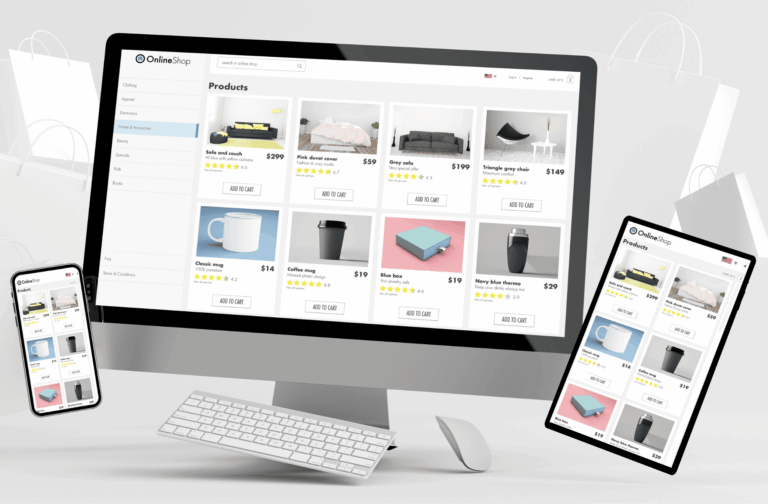
Shopify and Shopify Plus continue to dominate as preferred platforms for both small startups and large-scale enterprises. Their extensive features, scalable infrastructure, and vast app ecosystems make them a reliable choice for launching and growing online stores. But before launching your store, every brand faces a key decision: Should you use a pre-built template from the Shopify Theme Store, or invest in a custom-built Shopify solution tailored specifically to your brand?
In this article, we’ll help you weigh the pros and cons of both approaches so you can decide which option aligns best with your launch timeline, budget, business goals, technical capabilities, and long-term growth strategy.
The Shopify and Shopify Plus Ecosystem
Shopify remains one of the most trusted e-commerce platforms in 2025. As of early this year, the platform powers over 4.8 million active stores worldwide. In just the second quarter alone, over 2.6 million new stores were created, a clear sign of its growing adoption. Shopify Plus, the enterprise-level version of the platform, now serves more than 50,000 high-growth merchants and contributes nearly one-third of Shopify’s subscription revenue.
Shopify’s appeal lies in its ability to cater to businesses of all sizes from solo entrepreneurs to multinational brands. With a vast selection of apps, built-in SEO tools, omnichannel integrations, and developer-friendly APIs, Shopify has created an ecosystem that supports both out-of-the-box simplicity and complex customization. This flexibility leads us to the core design choice: using a theme or building from scratch.
What Is the Shopify Theme Store?
The Shopify Theme Store is a curated collection of pre-built themes that help merchants launch a beautiful and functional online store quickly. These themes are crafted by Shopify and certified developers to ensure quality, mobile responsiveness, and compatibility with the latest platform features.
Themes fall into 2 main categories:
- Free: Ideal for small businesses or startups with basic design needs. These themes are simple, clean, and easy to set up.
- Paid/Premium: Designed with more features and advanced customization options, these themes typically cost between $140 and $400.
Each theme provides a plug-and-play framework for your homepage, product pages, and checkout, allowing you to get online fast with a professional look.
The Advantages and Limitations of the Shopify Theme Store
The Shopify Theme Store is the fastest and most cost-effective way to launch. But it’s essential to understand the trade-offs.
Aspect | Advantages | Limitations |
Time to Market | Stores can be launched quickly, making it ideal for startups, seasonal campaigns, or fast-moving market opportunities. | Less flexibility for businesses that require highly customized or unique workflows. |
Cost | Affordable setup with free and premium themes (usually $0–$350), making it budget-friendly for small to medium businesses. | Lower upfront costs, but scaling may require investing in custom development later. |
Ease of Use | No coding required—Shopify’s theme editor offers drag-and-drop tools, color/font controls, and easy content adjustments. | Advanced customization often requires coding knowledge or developer assistance. |
Updates & Support | Themes are regularly updated by trusted developers to maintain security, performance, and compatibility with new Shopify features. | Updates may be limited to general improvements—specific business needs may still require custom fixes. |
Scalability | Many premium themes are optimized to work with Shopify Plus, allowing businesses to grow without switching platforms. | May not fully support complex features, integrations, or unique customer journeys as your business scales. |
Branding | Allows for basic branding adjustments (colors, logos, fonts). | Risk of design similarity with other stores using the same theme, limiting differentiation. |
Performance | Pre-optimized for fast load speeds out of the box. | Over-customization or heavy use of third-party apps can cause slower performance. |
Which Businesses Should Consider Shopify Themes?
The Shopify Theme Store is best suited for startups, small businesses, and entrepreneurs operating with limited budgets or technical expertise. It is particularly advantageous for individuals or teams aiming to enter the market quickly, such as those launching seasonal campaigns, testing new products, or validating a business idea through a minimum viable product (MVP). These themes offer a practical path to establish a digital storefront without the need for complex development.
Direct-to-consumer (DTC) brands with relatively simple product catalogs and marketing funnels can also benefit from using a pre-built theme. By utilizing the Shopify Theme Store, businesses can create a professional, mobile-friendly website that aligns with e-commerce best practices. This approach supports initial growth and offers the flexibility to upgrade or transition to a more custom solution as business needs evolve.
What Is Custom Shopify Development?
Custom Shopify Development refers to the process of creating a completely bespoke storefront tailored to a business’s unique needs. This approach utilizes Shopify’s Liquid templating language alongside a range of modern web technologies, including JavaScript frameworks like Next.js and Nuxt.js, as well as platforms such as Webflow, Laravel, and even integrations with WordPress. The development process typically involves a deep level of planning and execution covering aspects such as custom layouts, advanced user experiences, optimized checkout flows, and seamless backend integrations.
For merchants using Shopify Plus, custom development offers enhanced capabilities that are not accessible through standard theme setups. These include:
- Custom checkout logic and Shopify Functions
- Access to APIs for ERP and CRM system integrations
- Automated workflows through Shopify Flow
- Launch scheduling and campaign management with Launchpad
- Robust B2B functionalities, including custom pricing and multi-user management
Custom development projects are generally managed by experienced developers or specialized agencies. These professionals work closely with businesses to ensure the final storefront aligns with their branding, functionality, and growth objectives, offering a truly differentiated and scalable e-commerce solution.
The Advantages and Limitations of the Custom Shopify Development
Custom Shopify Development enables complete flexibility in visual layout, unique customer journeys, and advanced features that support specialized business models. For businesses with specific operational requirements or long-term scalability goals, this method provides unmatched precision and adaptability.
Aspect | Advantages | Limitations |
Design Flexibility | Full control over the look, feel, and structure of your store, ensuring it truly reflects your brand identity. | Requires design expertise and development time to execute. |
Functionality | Ability to implement advanced features like product configurators, subscriptions, loyalty programs, and AI-driven personalization. | Complex features increase both cost and development time. |
Performance | Optimized for speed by removing unnecessary theme features, ensuring smooth and fast user experiences. | Requires skilled developers to maintain and continually optimize. |
Integrations | Seamless connection with ERP, CRM, inventory systems, and marketing automation tools. | More technical complexity during setup and integration. |
Scalability | Built for growth, with the ability to handle multiple storefronts, international markets, and high traffic (especially with Shopify Plus). | Scaling requires ongoing investment in development and maintenance. |
Cost & Timeline | Long-term value through custom-built stability and scalability. | Higher upfront development costs and longer time to launch. |
Maintenance | Continuous improvements possible with custom updates and feature enhancements. | Ongoing support required for updates, bug fixes, and scalability upgrades. |
Which Businesses Should Consider Custom Shopify Development?
Custom Shopify development is particularly suitable for businesses with complex needs and long-term growth objectives. These include brands operating on Shopify Plus that require enterprise-level capabilities and are aiming for high revenue goals. It is also ideal for established companies with mature design systems and specialized business operations that cannot be accommodated by standard themes.
Retailers dealing with intricate product catalogs, customized pricing models, or subscription-based services as commonly seen in B2B, wholesale, or DTC hybrids stand to benefit significantly from the flexibility offered by a custom build. Additionally, global e-commerce players managing multiple storefronts, currencies, and regions often require the technical versatility that only custom development can deliver. By removing the inherent limitations of off-the-shelf themes, custom development establishes a robust foundation tailored to your operational needs. This approach enhances user experience, strengthens brand consistency, and allows for performance optimization ultimately positioning your business for long-term scalability and higher conversion rates.
What Should You Consider Before Making Decisions?
Before deciding between a Shopify theme and a custom-built store, businesses must assess five key areas:
Flexibility
It plays a major role in how much control you have over your storefront. Shopify themes offer moderate design customization, generally limited to the built-in theme editor settings, which makes them more suitable for straightforward business models. In contrast, custom development provides complete freedom over layout, features, and interactivity, making it ideal for businesses with unique workflows, multilingual support, or advanced product customizations.
Performance
It’s crucial to user experience and conversion rates. While Shopify themes are optimized for good load times, performance can be affected by excessive third-party apps or custom tweaks. Custom-developed stores can be optimized for speed and efficiency from the ground up, removing unnecessary components and ensuring a smooth shopping experience tailored to your specific needs.
Branding
It should also be carefully considered. With Shopify themes, businesses can perform basic brand customization. However, these themes may end up looking similar to others using the same design. Custom development allows for a fully branded experience with unique design elements, animations, and storytelling features that can better represent a company’s identity.
Maintenance
This varies significantly between the two approaches. Shopify themes are generally low-maintenance and benefit from regular updates by the theme’s original developers. Custom-built stores require consistent technical upkeep, including testing, updates, and bug fixes. This makes them more suitable for businesses that have in-house technical teams or long-term partnerships with web development agencies.
Cost
This is another major factor that can influence your decision. Shopify themes are the more affordable option, with prices ranging from free to around $350. They also entail minimal setup and lower technical costs. In contrast, custom development requires a larger upfront investment, often ranging from $3,000 to over $50,000 depending on the complexity of the store. Additionally, custom builds require a long-term budget for ongoing support, updates, and scalability enhancements.
Should You Choose a Shopify Theme or Custom Development?
The “best” choice isn’t universal, it’s the one that best fits your business’s current stage and future ambitions.
Choose a Shopify Theme if:
- You are on a tight budget or timeline.
- Your product catalog is straightforward.
- You don’t have unique functional requirements.
- You are launching a new business and want to test the market first.
Choose Custom Development if:
- You have a strong, unique brand identity that a theme cannot capture.
- You need specialized features or complex integrations.
- You are on Shopify Plus and want to leverage its full power.
- You are focused on long-term scalability and performance is a top priority.
Partnered with Flow Digital to Build Your Shopify Store
Choosing the right Shopify solution can significantly influence your business outcomes. Whether you prioritize cost-efficiency, advanced functionality, or tailored branding, the path you take should align with your strategic goals.
At Flow Digital, we specialize in building high-performing Shopify stores that don’t just look stunning, but are strategically designed to drive conversions, maximize performance, and fuel long-term business growth.
Whether you’re a small business launching your first store or an established brand scaling up on Shopify Plus, our expert team is ready to support you every step of the way. Contact Flow Digital Team today for a free consultation and discover how we can help you create a high-performing, scalable Shopify store tailored to your brand.